
Losing your spouse is emotionally challenging, made even more difficult by the administrative tasks that follow. One of these tasks is understanding the tax implications of your spouse’s passing, which helps safeguard your financial well-being.
Choosing the correct tax filing status is one of the most important decisions you’ll make during this transition. The Internal Revenue Service (IRS) provides specific options designed to support widows and widowers during this transition. Among these is the qualifying surviving spouse status (formerly known as qualifying widow or widower), which allows eligible individuals to continue using favorable tax rates for a set period.
Understanding who qualifies as a surviving spouse and how this status impacts your tax return will help you avoid common pitfalls and manage your tax burden more effectively.
Filing taxes in the year of your spouse’s passing
Before discussing the qualifying surviving spouse rules, it’s important to address how to file taxes in the year of your spouse’s death.
If your spouse died within the tax year and you did not remarry before the end of that period, the IRS will consider you married for that entire year. That means you can still file your taxes under the married filing jointly status. This option is often more favorable than filing separately, as it typically results in a lower tax liability. By filing a joint return, you can combine your incomes and deductions, which qualifies you for a higher standard deduction and wider tax brackets, helping you better manage your taxable income.
However, if you remarry before the end of the year, joint filing with your deceased spouse is no longer an option. Instead, you would likely file jointly with your new spouse, while your deceased spouse’s return would need to be filed as married filing separately.
Read also: Learn more about our tax planning services
What is qualifying surviving spouse status?
After the tax year in which your spouse passes away, your filing status options change. For individuals without dependents, the status often shifts to single filers. Note that if you have a dependent child, you may be able to use the qualifying surviving spouse filing status.
This special status allows eligible widows and widowers to retain the same tax brackets and standard deduction as married couples filing jointly, offering significant tax relief. It’s available for up to two years following the year of your spouse’s death, and it can help mitigate the higher tax rates associated with single or head of household filings.
Eligibility criteria: Do you qualify?
To claim qualifying surviving spouse status, you must meet all of the following criteria set by the IRS:
- Marital history: You need to have been eligible to file a joint return with your late spouse in the year of their passing, regardless of whether you ultimately filed jointly.
- Remarriage: To retain this status, you must remain unmarried during the tax year you are claiming it. If you remarry, you are no longer eligible for the qualifying surviving spouse filing status for that year.
- Dependent child: You must have a biological child, stepchild, or adopted child who qualifies as your dependent. Note that a foster child does not qualify you for this specific status.
- Residency: The dependent child needs to have lived in your home for the entire year, except for temporary absences.
- Household costs: You need to have shouldered more than half of maintenance costs for your home during the tax year.
What counts as household expenses?
To satisfy the “cost of keeping up a home” requirement, you must contribute more than 50% of the total household costs. These expenses typically encompass:
- Rent or mortgage interest payments
- Property taxes
- Home insurance
- Utilities and essential repairs
- Food consumed within the home
Expenses such as clothing, education, medical treatment, vacations, and transportation are generally not included in this calculation.
Temporary absences
The IRS understands that life happens. If your child is away from home for school (e.g., a full-time student), vacation, business, medical care, or military service, these are usually considered temporary absences. Your child is still considered to have lived with you during these periods.
Understand the tax advantages of qualifying surviving spouse status
Why does this filing status matter? Its primary value lies in allowing you to retain the same tax benefits as those who are married filing jointly for an additional two-year period following the death of your spouse.
- Enhanced standard deduction: You are eligible for the standard deduction designated for married joint filers. Since this is double the amount available to single filers, it can substantially lower your overall taxable income.
- Favorable tax brackets: Your income is taxed using the married filing jointly rate schedule. This can allow more of your income to be taxed at lower rates before moving into a higher bracket, which may be more tax-efficient than filing as single or head of household.
It is important to note that while you will file an individual return rather than a joint one, your tax liability is calculated using the more generous joint-filing parameters.
This Touches More Than Your Tax Return
The loss of a spouse often calls for a wider financial review. When the time feels right, our fiduciary advisors can help you see how your filing status fits your broader picture, at your pace, with no pressure.
Schedule a Conversation →Transitioning after the two-year period
After the two-year period ends, your filing status will probably change again if you remain unmarried.
- Head of household: If you still have a qualifying dependent living with you, you will likely transition to this status. While it offers more favorable tax rates and a higher standard deduction than the single status, the benefits are less significant than those of a qualifying surviving spouse.
- Single: If your children are no longer dependents or have moved out, you will typically transition to the single filing status.
Planning beyond the tax return
While filing taxes is an immediate concern, the death of a spouse often triggers the need for a broader financial review.
Adjustments to tax withholding
A change in filing status, whether from married filing jointly to a qualifying surviving spouse, or eventually to single, could alter your tax liability. It’s wise to review your tax status and adjust your W-4 withholding with your employer, or adjust estimated tax payments to avoid an unexpected tax bill or underpayment penalties.
Social Security and survivor benefits
Although your filing status doesn’t directly determine your Social Security benefits, the two are linked within your overall financial plan. As a widower, you may be eligible for survivor benefits, and it’s essential to understand how this income is taxed, which depends on your gross income and filing status.
Credits and deductions
A dependent child in your care could qualify you to be eligible for a child tax credit, education expense credits, and more. The qualifying surviving spouse filing status keeps the income limits for these credits at the higher, joint-filer levels for those two years.
How to file taxes: Your next steps
Filing taxes during this period requires careful attention to detail. Follow these steps:
- Gather documentation: Collect all necessary records, including the death certificate (for the year of death return), and records of household expenses to prove you paid more than half the costs if questioned.
- Choose the right form: You will file using the standard Form 1040.
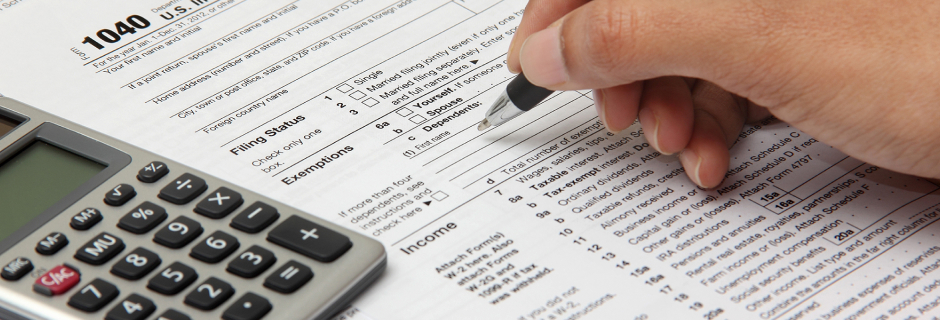
- Check the box: On Form 1040, check the box for “qualifying surviving spouse.” You must also enter the name and Social Security number of the child who qualifies you for this status.
Given the complexity of US tax laws and the emotional weight of the situation, many people seek guidance from a tax pro or a certified public accountant. A professional can help verify if you meet the eligibility criteria and assist with itemizing deductions if that strategy is more beneficial than the standard deduction.
Partner with MY Wealth Management
Navigating the financial landscape after the loss of your spouse requires compassion, meticulous attention to detail, and a supportive ally. At MY Wealth Management, we understand that major life changes often demand a comprehensive reassessment of your financial future.
As fiduciaries, we are committed to acting solely in your best interest. We can work alongside your tax pro or certified public accountant to help you understand how your filing status impacts your broader financial strategy. Whether you need assistance reviewing your income strategy, adjusting to new household costs, or evaluating your portfolio, we are here to provide clear, objective guidance.
When You Are Ready, Let’s Talk
There is no rush. Whenever you feel ready, we invite you to schedule a conversation to discuss your current situation and explore how we can support you through this transition.
Schedule a Conversation →